Table of Content
But one other interpretation of Gertrude’s character seems to be that she has a strong intuition for self-preservation and development that leads her to rely too deeply on men. Not only does this interpretation clarify her conduct all through a lot of the play, it additionally links her thematically to Ophelia, the play’s different important female character, who can also be submissive and completely dependent on males. Though not the first to solid Hamlet in an Oedipal gentle, Laurence Olivier popularized the notion of an untoward love between Hamlet and his mom within the 1947 Royal Shakespeare Company manufacturing and again in the 1948 film model. In the film, Olivier, playing Hamlet opposite his spouse within the function of Gertrude, staged the scene so that it was stripped of all its ambiguities. He dressed Gertrude's mattress in satin, and he dressed the Queen, awaiting her son's arrival, in the identical suggestively folded satin and silk.

He accuses Gertrude of lustfulness, and she or he begs him to go away her alone. Hamlet speaks to the apparition, however Gertrude is unable to see it and believes him to be mad. The ghost intones that it has come to remind Hamlet of his function, that Hamlet has not but killed Claudius and must obtain his revenge. Noting that Gertrude is amazed and unable to see him, the ghost asks Hamlet to intercede along with her. Hamlet describes the ghost, however Gertrude sees nothing, and in a second the ghost disappears.
Act Four, Scene Four
It is as if Hamlet is so distrustful of the potential for appearing rationally that he believes his revenge is more prone to come about as an accident than as a premeditated act. In Gertrude’s chamber, the queen and Polonius wait for Hamlet’s arrival. Polonius plans to cover so as to listen in on Gertrude’s confrontation with her son, within the hope that doing so will allow him to determine the reason for Hamlet’s bizarre and threatening habits. Polonius urges the queen to be harsh with Hamlet when he arrives, saying that she should chastise him for his recent conduct. Gertrude agrees, and Polonius hides behind an arras, or tapestry. This is one other point in the play where audiences and readers have felt that there is more going on in Hamlet’s mind than we will fairly put our fingers on.

Sigmund Freud wrote that Hamlet harbors an unconscious need to sexually enjoy his mother. Whether or not Freud was right about this is as troublesome to show as any of the issues that Hamlet worries about, but his argument in regard to Hamlet is sort of remarkable. He says that whereas Oedipus truly enacts this fantasy, Hamlet solely betrays the unconscious need to do so.
Scene Iv The Queen's Closet
The two have interaction in a verbal exchange that possesses the breathless engagement of foreplay, and Hamlet then presses himself onto his mom in an overtly sexual way. King Hamlet's Ghost reappears to Hamlet, but only Hamlet can see him. Hamlet believes that the Ghost has come to chide his tardy son into finishing up the "dread command," however Hamlet then perceives the Ghost as his mom's protector.
He bids her goodnight, however, earlier than he leaves, he points to Polonius’s corpse and declares that heaven has “punished me with this, and this with me” (III.iv.158). Dragging Polonius’s physique behind him, Hamlet leaves his mother’s room. Hamlet’s entrance so alarms Gertrude that she cries out for help. Polonius echoes her cry, and Hamlet, pondering Polonius to be Claudius, stabs him to death. Hamlet then verbally attacks his mother for marrying Claudius. In the center of Hamlet’s attack, the Ghost returns to remind Hamlet that his real objective is to avenge his father’s death.
Hamlet draws his sword and thrusts it through the tapestry, killing Polonius. When Hamlet lifts the wallhanging and discovers Polonius' body, he tells the body that he had believed he was stabbing the King. He presses contrasting pictures of Claudius and his brother in Gertrude's face. He factors out King Hamlet's godlike countenance and braveness, likening Claudius to an infection in King Hamlet's ear.
Hamlet is thus a quintessentially fashionable individual, as a result of he has repressed wishes. Hamlet once again speaks to his mother with disrespect exhibiting his distain in the course of women and telling her her bed room is filthy. Gertrude is the sufferer here and nonetheless begging Hamlet to treat her better. Up till this scene, one can dismiss the notion that Shakespeare envisioned a prince whose love for his mom was unnatural and itself incestuous.
Adam Bede
If Gertrude received him in her closet, she treated him extra as an intimate than as a son. This quality explains why Gertrude would have turned to Claudius so quickly after her husband’s demise, and it additionally explains why she so shortly adopts Hamlet’s point of view on this scene. Of course, the play doesn't particularly clarify Gertrude’s habits.
The ghost tells Hamlet to guard his mom.Gertrude asks Hamlet to cool his anger. Shakespeare’s play concerning the Prince of Denmark shows the beginning of an Oedipal Complex, with Hamlet’s jealousy of his uncle Claudius for marrying his mother Gertrude and the craze that Hamlet’s emulation causes. Hamlet threatens to kill Gertrud- who fears for her life and calls out for assist. Read extra in regards to the style of revenge tragedy in British literature. Renew your subscription to regain entry to all of our unique, ad-free research instruments.
Act Iii, Scene Iv
Hamlet tries desperately to convince Gertrude that he is not mad however has merely feigned madness all alongside, and he urges her to forsake Claudius and regain her good conscience. He urges her as properly to not reveal to Claudius that his insanity has been an act. Gertrude, nonetheless shaken from Hamlet’s furious condemnation of her, agrees to maintain his secret.
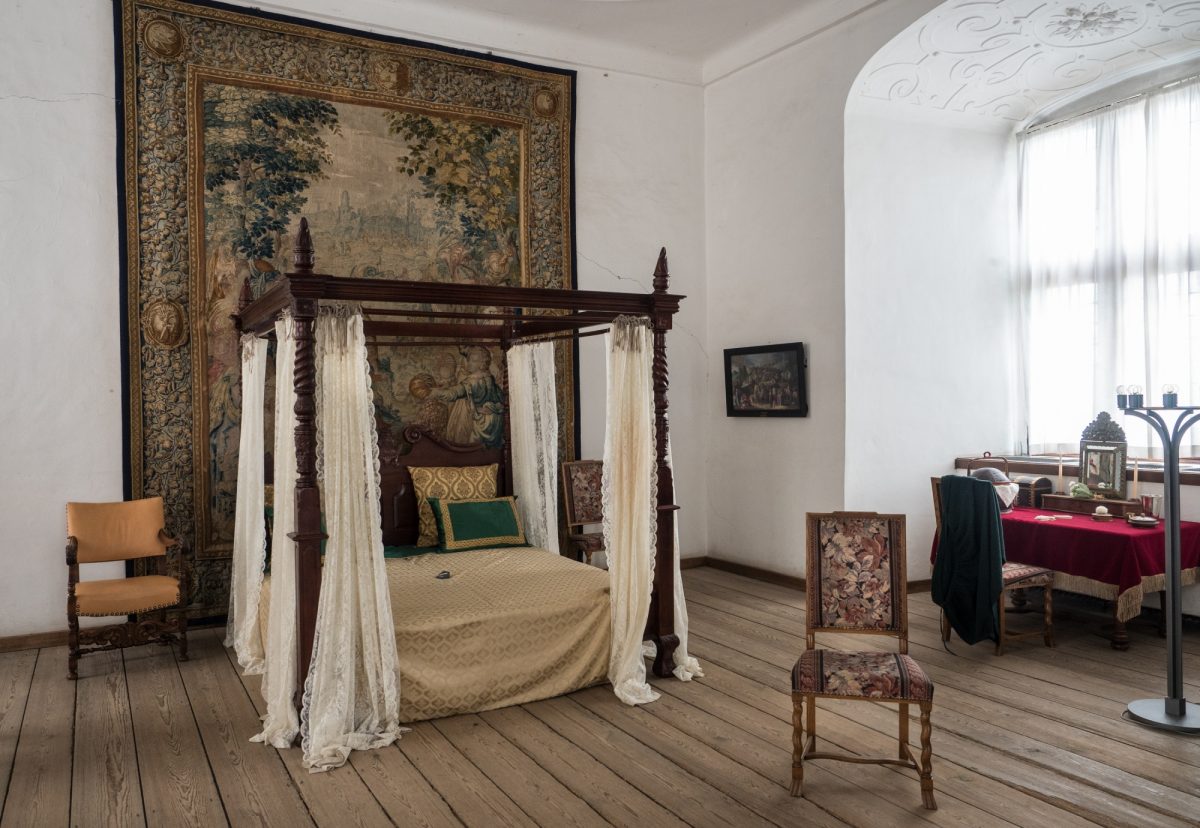
Gertrude can't see the Ghost and pities Hamlet’s obvious insanity. After the Ghost exits, Hamlet urges Gertrude to desert Claudius’s mattress. He then tells her about Claudius’s plan to ship him to England and divulges his suspicions that the journey is a plot in opposition to him, which he resolves to counter violently. Although a closet was a private room in a fort, and a bedroom was meant for receiving guests, the convention because the late 19th century has been to stage the scene between Hamlet and Gertrude in Gertrude's bed room. Staging the scene within the closet somewhat than in a bed room is extra in line with the Freudian psychoanalysis of an Oedipal Hamlet — a man resembling the Greek character Oedipus who bedded his mother and killed his father.


No comments:
Post a Comment